


White Noise vs. Pink Noise vs. Brown Noise: Which Fits Sleep, Focus, or Masking?
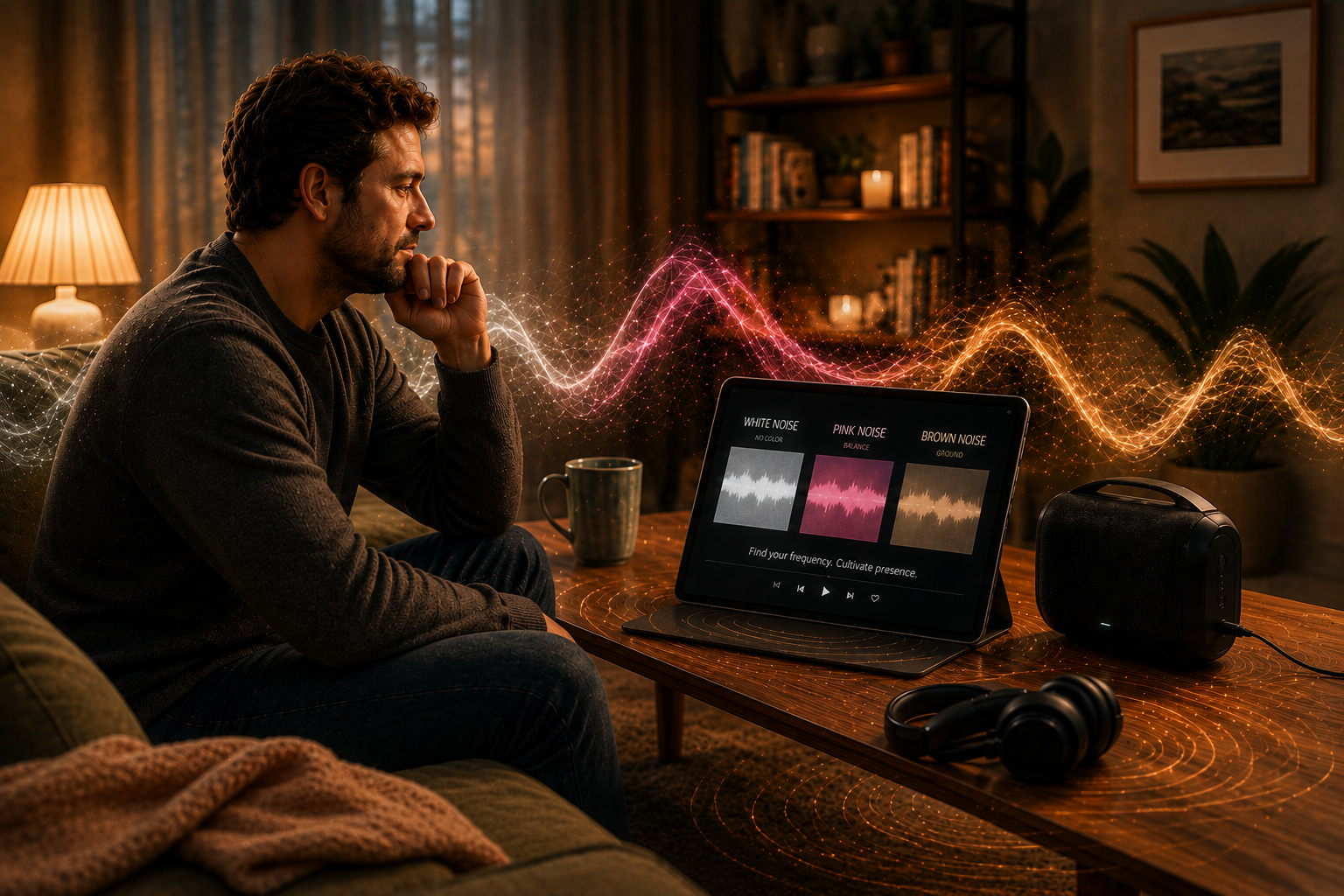
A fan humming beside the bed. Rain against the window. The low rumble of distant thunder. White, pink, and brown noise each create a different kind of soundscape, and discovering which one belongs in your space may be more personal than you think—especially when you are trying to sleep, focus, or soften the sounds around you.
Imagine a room with a sound you cannot quite stop noticing: traffic passing outside, a conversation in the next room, a fan cycling on and off.
You add a steady layer of sound, and the interruption seems to soften.
That is the basic idea behind sound masking.
White, pink, and brown noise can all create that steady background, but they distribute sound differently. White noise sounds brighter, pink noise has less high-frequency emphasis, and brown noise has a deeper, lower texture. We can’t say one is universally best for sleep or focus. The more useful question is which sound best supports the environment you are trying to create.
And sometimes, the answer is no added sound at all.
What Is the Difference Between White, Pink, and Brown Noise?
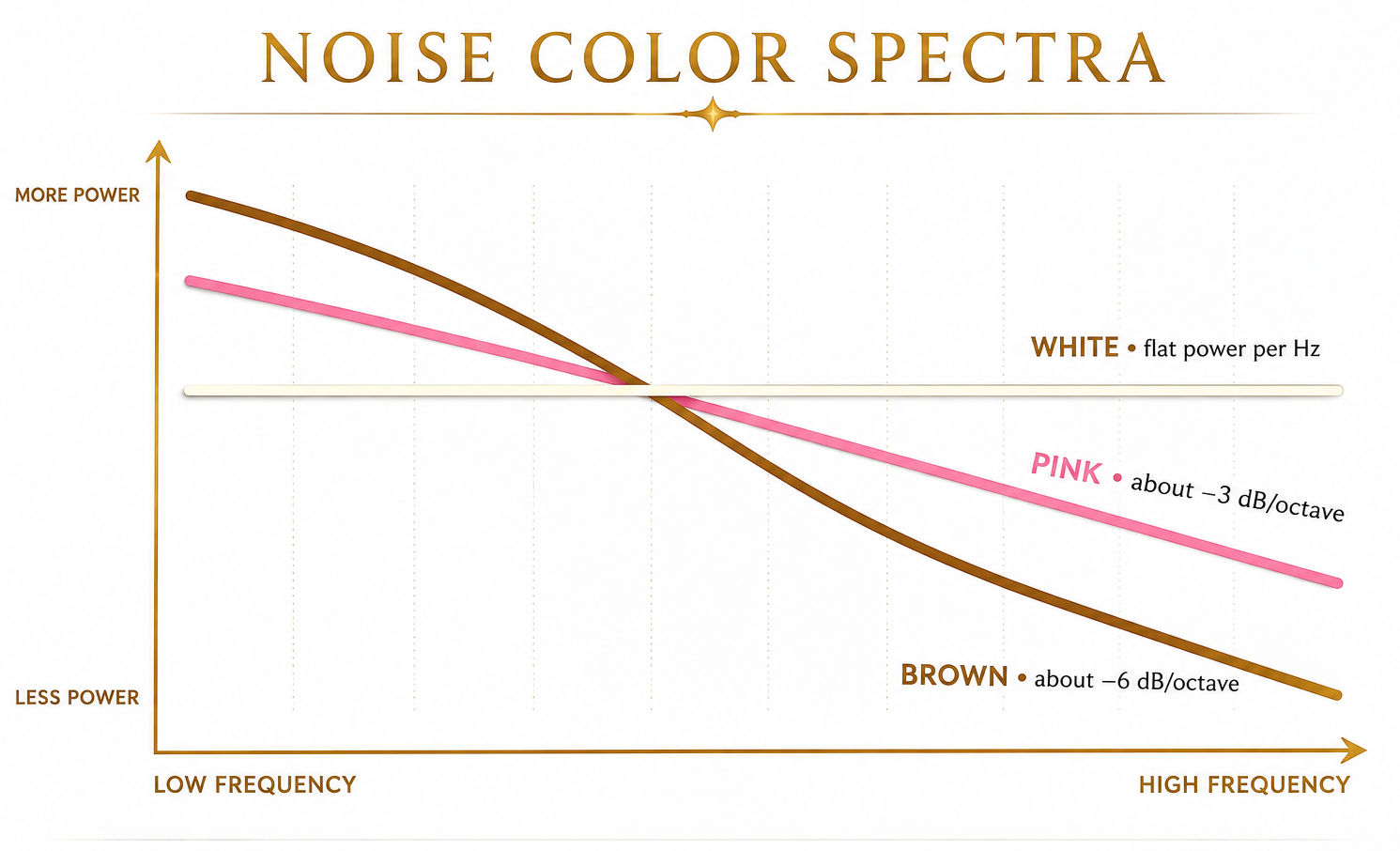
All three contain many frequencies at once. What changes is how much of the sound sits in the higher or lower parts of that range.
White noise spreads its energy fairly evenly, which is why it often sounds bright and hiss-like—similar to steady air from a fan or the static between radio stations.
Pink noise has less emphasis on the higher frequencies, giving it a softer balance. Many people find it reminiscent of familiar natural sounds such as steady rainfall.
Brown noise reduces the higher frequencies even more, creating a deeper, heavier sound. It can bring to mind distant thunder, a strong waterfall, or the low rumble of wind.
The technical difference is measured by how sound energy changes across frequencies, but the easiest way to remember it is simple:
White is brighter. Pink is softer. Brown is deeper.
Which Noise Masks Sound Best?
Imagine trying to read while someone is having a conversation in the next room. Even when you cannot make out every word, your attention keeps reaching toward the sound.
Now imagine that same room with a steady layer of rain in the background.
The conversation is still there. But no longer pulls at you quite as strongly.
That is sound masking.
That is the basic idea behind sound masking. The background sound does not erase the interruption; it softens the difference between the interruption and the rest of the room, making other sounds less noticeable.
White noise can work well when the sounds around you are varied or unpredictable. Pink noise offers a softer texture, while brown noise brings more of a low, grounded rumble. Which one feels best depends partly on the sound you are trying to soften and partly on the texture you actually enjoy listening to.
That is why the quietest useful level is often the best place to begin.
And before adding sound, it is worth looking at the room itself. A closed door, a quieter fan, better weather sealing, or simply moving farther from the source may solve more than turning up a speaker. Sometimes the most elegant soundscape is the one that needs the least sound.
Which Noise Is Best for Sleep?
Some people like to fall asleep to the low, familiar buzzing of a fan.
It may be the sound itself that feels comforting. Or perhaps it softens the little noises that would otherwise catch the ear: a car passing outside, a dog in the distance, a conversation in another room.
White, pink, and brown noise can create a similar kind of soundscape with the addition of a steady layer of sound that gives the room something consistent to listen to.
So which one is best for sleep?
The research suggests that steady background sound may be most useful when environmental interruptions are part of the problem. Across studies, the conditions differ enough that there is no clear reason to treat one noise color as universally superior.
For someone who sleeps beside a busy street, a steady layer of sound may soften the noise of traffic. For someone already sleeping in a quiet room, adding another sound may simply add more to listen to.
And perhaps that explains why the humble fan has become such a familiar nighttime companion.
It simply creates a gentle, predictable background in which the smaller sounds of the night can become less noticeable.
Sometimes the best sound for sleep is the one that quietly disappears into the room.
What About Focus?
Try working in a quiet room and then in a café.
The café may actually feel easier.
There is movement, conversation, dishes, footstep, and the soft activity of other people, yet because none of it is asking for your full attention, the room can sometimes feel easier to settle into. For some people, a steady broadband sound creates a similar effect by making the small changes in the environment less noticeable.
Research has explored noise and task performance, including among people with attention difficulties, but the results vary with the person, the task, and the sound itself.
That makes this less a question of finding the “best” noise and more a question of discovering what kind of sound environment lets your attention settle.
Brown noise has become popular for this because its deeper texture can feel unobtrusive to some listeners. Pink or white noise may suit someone else. And for some people, silence wins.
A Simple Way to Find Your Sound
Rather than choosing from someone else's recommendation, try listening for yourself.
Use white, pink, and brown noise on separate nights or work sessions, keeping the setup similar. Notice which feels comfortable, which outside sounds still break through, and whether the sound eventually disappears into the background.
If practical, include silence.
You may discover that the sound you prefer is not the most popular one, but the one that quietly belongs in the room.
Sometimes the right sound is the one you stop noticing.
Sources and Educational Notes
- Riedy and colleagues — Noise as a Sleep Aid: Systematic Review
- Impact of White Noise on Sleep Quality: Systematic Review and Meta-Analysis (2025)
- Northwestern Medicine — White, Pink, and Brown Noise
- Associated Press — Pink Noise, Sleep, and the Color-Noise Buzz
This article is educational and not individualized sleep, hearing, or medical advice. Bio Alquemie's audio experiences are offered for listening, reflection, creativity, and general wellness, not diagnosis or treatment.
The Sacred Sound Vault holds the frequency sessions behind these notes.
Start 7-Day Free Trial